Why Nostr Is Resilient (And the Internet Isn't)
AWS, Azure, and Cloudflare all failed in late 2025 — and took half the internet with them. Here's why Nostr doesn't have that problem.
In late 2025, three of the biggest cloud infrastructure providers — AWS, Azure, and Cloudflare — all experienced major outages. Not at the same time. But close enough to make a point.
When AWS went down, it didn't just affect Amazon. It took out streaming services, banking apps, and enterprise tools that millions of people rely on daily. When Azure failed, Microsoft's own products went dark — and so did the businesses built on top of them. When Cloudflare had issues, websites and APIs around the world became unreachable.
X went offline. ChatGPT went offline. LinkedIn went offline. Public transit systems in some cities stopped displaying real-time information. Not because of a cyberattack. Because a single provider had a bad day.
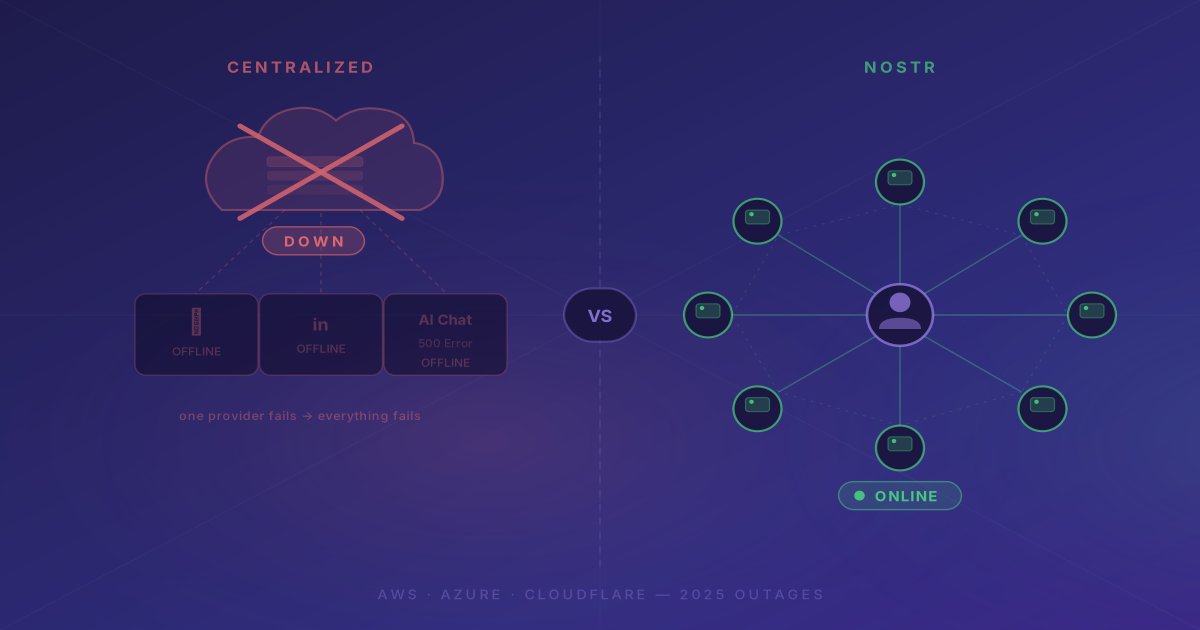
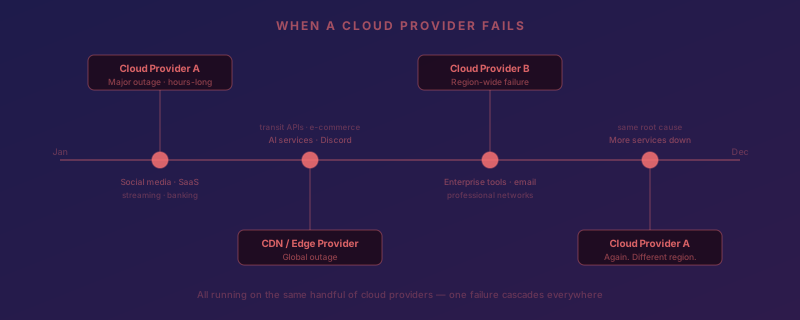 When a major cloud provider fails, every service built on top of it goes down simultaneously — social media, AI tools, enterprise software, banking APIs
The Problem: Single Points of Failure
The modern internet looks decentralized on the surface. Millions of websites, apps, and services. But underneath, most of them run on a surprisingly small number of providers.
Think of it like a city's power grid. Hundreds of buildings, each with their own lights and systems. But if they all draw from the same power plant, one failure blacks out the entire city.
That's what happened in 2025. The "buildings" were different — X, LinkedIn, ChatGPT, transit apps — but they were all drawing from the same infrastructure. When that infrastructure failed, everything went dark together.
This isn't a bug. It's the architecture. Centralized platforms depend on centralized infrastructure. They have no choice.
How Nostr Avoids This
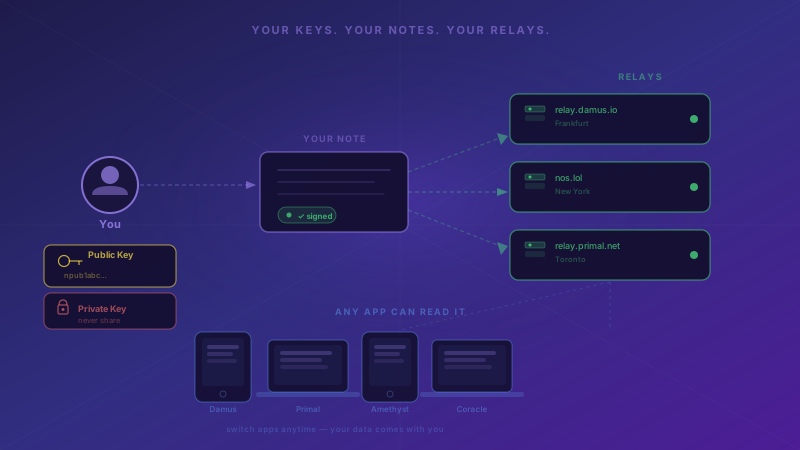
Nostr works differently. It runs on many independent relays — simple servers operated by different people, in different locations, on different infrastructure.
When you publish a post on Nostr, your app sends it to multiple relays. Those relays are not owned by the same company. They don't run on the same cloud provider. They don't share a single point of failure.
If one relay goes down, the others keep working. Your posts are still accessible. Your identity still exists. The network keeps running — because it was never dependent on any single node.
You choose which relays to use. Most Nostr apps connect to several by default, giving you built-in redundancy without any extra setup.
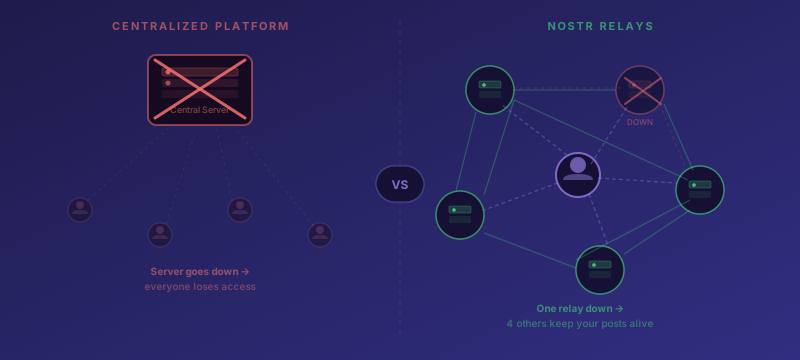 Centralized vs Nostr: when a single server fails everything collapses — on Nostr one relay goes down while the others keep your posts alive
No Company, No Kill Switch
There's a deeper point here. Every platform you use today exists at the discretion of the company that runs it.
Twitter became X because one person decided it should. LinkedIn can change its algorithm, its rules, or its terms of service overnight. If a platform decides your account violates policy — or if they simply make an error — you lose access to your network, your content, and your professional presence. There is no appeal that's guaranteed to work.
Nostr has none of these risks because there is no company behind it. Nostr is a protocol — an open standard, like email or HTTP. No one owns it. No one can change the rules for everyone. No one can flip a switch and turn it off.
Your identity on Nostr is a cryptographic key pair that you control. Not a username registered on someone else's database. It can't be suspended, revoked, or deleted by a third party.
What This Means for You
If the platforms you depend on for professional communication went offline tomorrow — no LinkedIn, no email, no Slack — could you still reach your network?
For most people, the answer is no. And that's a risk worth thinking about.
Nostr doesn't require you to abandon the tools you use today. But it offers something none of them can: a communication layer that no single failure can take down. Your posts exist across multiple relays. Your identity lives on your device. Your network is resilient by design, not by promise.
The 2025 outages weren't a one-time event. They were a preview. The question is whether you're building on infrastructure that can handle the next one.